Showing posts with label Madagascar. Show all posts

Saturday, February 18, 2012

An embarrassing confession...

We all make mistakes, right?
There’s no call for embarrassment.
But some mistakes make you feel sillier than others...

Now I’m not talking about those absent-minded slip ups that everyone makes (they do, don’t they?).
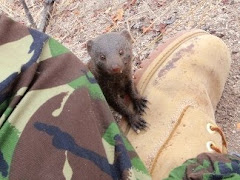
You know, like realising in the supermarket that your shirt’s on inside out or that you’ve forgotten to change out of your mismatched trainers (the red pair’s left shoe is raggedy and the blue pair’s right shoe... Well, the mongooses don’t mind!).

No, the kind of blunder I’m talking about springs from ignorance, pure and simple uncouth and ugly.

I remember my sister discovering that her rural high-school pupils didn’t believe dinosaurs ever existed. They thought that these prehistoric beasts – along with King Kong, Godzilla and the Muppets – were creations of the media.
Well that’s the sort of mistake that I’m guilty of.

It all started when I was pottering about the local newsagent and noticed a stack of glossy, movie-spinoff booklets.
A sweat-streaked Harry Potter glared up from the cover of the top one, below that peeped the earnest blue face of a Na’vi from Avatar, and on a third, two CGI aliens stared nonchalantly off into space. They were lankily humanoid but clothed in a stylised uniform of fur: pure white with chocolate brown insets on their arms, chest and thighs. Disconcertingly golden eyes stared from their smooth black faces, and black elf-like ears peeped from the fur on their heads.
‘What will they come up with next’, I wondered before sauntering on.

But that image kept haunting me; there was something disquieting about it. They were so humanlike, but...
It was as if the artist had melded human facial features with those of a llama or guanaco. It was uncanny. And unnerving.

So you can imagine my shock - on my very first day in Madagascar – when I rounded a bend on a forest trail and found myself face to face with just such an alien. In fact, two real, living, breathing aliens.
Oh, and did I mention the excruciating embarrassment?


Extraterrestrials assessing the chemical composition of Earth’s flora? No, Coquerel’s sifakas (Propithecus coquereli) contemplating lunch. But you can see how one could be mistaken, can’t you? Oh sure you can.  Please...
 
When not impersonating computer-generated aliens, Coquerel’s sifakas hang out in groups of 2-10, in the dry forests of NW Madagascar. Like all sifakas, they're strictly vegan and the ladies rule the roost.

Named after their explosive, hissing alarm call (shee-fark!), sifakas are the bounders of the lemur world. I’m not being judgemental here; I mean it literally. They’re made to hop. With legs 35% lankier than their arms (the figure for people is 65%), these lemurs leap frog-like from tree trunk to tree trunk, and cling there vertically with their knees pressed against their chests. They’ve artistically long fingers, and utterly outrageous big toes, to clamp vice-like around tree trunks.


A toe of note.

Now if my first encounter with sifakas made me feel like Bridget Jones at the launch of Kafka’s Motorbike, my second interaction was almost as disquieting.

We’d just arrived at Berenty Private Reserve in southern Madagascar after a long, hot morning jolting over crumbling tarmac (last road mending, the 1950s). Trudging through the heat and dust towards the promise of lunch, I glanced up into a huge tamarind tree that overhung the tourist cabins.
There, almost within arm’s reach, was a fluffy white tangle of Verreaux’s sifakas. Pristine white, apart from a Santa’s cap of chestnut brown, they lounged along the tree’s massive branches or hung languidly upside down from the branch tips like an angelic manifestation of spider monkeys. As I gasped, they gazed down at me interestedly, golden eyes bright in their intelligent sooty faces. I can’t begin to describe the emotional impact of their unexpected and incongruous appearance; try to imagine the warmth invoked by fluffy white bath-towels coupled with the enchantment of snow.
Needless to say, I was very late for lunch.


Of the nine sifaka species bouncing around Madagascar, only the Verreaux’s sifaka (Propithecus verreaux) is not endangered (it’s considered vulnerable). It’s also my favourite (why court heartbreak?).

The Verreaux's sifaka groups at Berenty hold territories of only 2-3 ha (5-7 acres); that means 15 groups of sifaka could ricochet around happily within the territory of one dwarf mongoose group! 


Hanging loose. Verreaux's sifakas live in mixed-sex groups where love is free. However, the reigning honcho fathers most of the kids because he dogs the steps of any female on heat.
  
Now if, like me, your enthusiasm for wildlife is tainted by vices (laziness, for example, or voyeurism), Berenty Reserve is the place to be.
Protected since 1936, this tiny pocket (250 ha /620 acres) of gallery forest is set within a vast sisal plantation (the spiky aloe used to make ‘green’ shopping bags) and is chockfull of lemurs. Alison Jolly began studying ring-tailed lemurs here in 1963, so the furred inhabitants are enchantingly blasé about non-furred primates. You can lounge on your veranda and happily spy on three species of lemur as they blithely scent-mark, squabble or snooze. And of course you can also potter at leisure in the forest, blissfully unchivvied by zealous park guides.
It was certainly a highlight of my trip. 

No, not a sifaka, but a typical Berenty scene. Ring-tailed lemurs (Lemur catta) and red-fronted brown lemurs also smooch around camp.

High density living is the norm for sifakas. Groups of crowned sifaka (Propithecus coronatus) claim ownership to just 1.5 ha (3.7 acres) of dry deciduous forest (in NW Madagascar) and they advertise possession by smearing around goo from their chest and anal glands.

Sifakas, of course, are famous for another trait. Designed to leap, tree to tree, they aren’t well equipped to negotiate flat land. Bizarrely, they stand up on their lanky hind legs and skip along sideways, twisting their torsos back and forth and holding their arms up effeminately for balance. If you haven’t seen footage of these guys ‘dancing’, treat yourself by clicking here or here.
 
Leaping lemurs!
 

'No, I've never heard of the Ministry of Funny Walks.
Why do you ask?'


Let's move it, move it, move it!
 
Strutting their stuff by day, sifakas kip in the tree tops after dark. But despite this safety measure, being eaten is still a serious problem for them (well for anyone, I guess). Fosas, who specialise in chomping mammals, cunningly clamber up and nab them in the night. Raptors also won't say no to an occassional lemur. 
In an effort to evade these lemur-eaters, sifakas employ the usual arsenal of ‘functionally referential’ alarm calls (i.e. they shriek ‘Run!’ or ‘Hide!’ or ‘Get down!’ rather than ‘Harrier-at-10 o’clock!’ or ‘Bloody fosa!’).

What’s interesting is that different populations use the standard calls in different ways. While everyone seems to know that roaring barks warn of raptors (the lemurs look up and climb down), researchers found that playbacks of the iconic shee-fark cry invoked mixed responses.
Coquerel’s sifakas, and Verreaux’s sifakas who lived within fosa territory, believed it warned of ground predators (they looked down and climbed up), but Verreaux’s sifakas living in a fosa-free local just ran away. Growls were even more personalised. Coquerel's sifakas living in places with many birds of prey interpreted a growl as warning of aerial predators, while Verreaux's sifakas residing in fosa-rich habitat thought a growl meant prowling carnivores. The other populations, of both species, associated growls with minor disturbances.
Now this shows that the sifakas learn the meaning of their calls from others, and it lets them adapt calls to meet local needs. But what happens when we come along and translocate animals from one population to another?
 
'What? He's growling?! It's all Greek to me.'
The diademed sifakas (Propithecus diadema) living in Analamazoatra Special Reserve (aka Perinet) were translocated into the park in 2006 from three different sites (the original inhabitants were hunted to extinction in 1973). They appear to be prospering despite any language barriers.   

Like all the larger lemurs, Milne Edward's sifakas (Propithecus edwardsi) are hunted by humans as well as fosas. Although 'fady' (taboo) prevents certain tribes from consuming particular species, it often doesn't prohibit them from catching and selling the animals to people who do. Lemur is a delicacy in city restuarants.


Fossa snack food. Milne Edward’s sifakas bear only a single sprog every second year. 40% of their ankle-biters don’t make it to their first birthday, and only a third reach puberty.


A Milne Edward's sifaka (in Ranomafana National Park) awaiting the arrival of a Hollywood talent scout.

Saturday, December 31, 2011

Why raw bamboo shoots are a no no

I was sitting on a wet, slimy boardwalk watching tiny leeches inch their way up my mud-caked boots.
Huge trees loomed all around, their foliage heavy and dripping from a recent downpour. Dark clouds still pressed low, making the forest as gloomy as I was feeling.

The conversation didn’t help.

My companions were debating how long a species could remain unseen before it should be declared extinct.

There was good reason for both the topic and our despondency.

You see we were awaiting the impossible.


How did we get into this predicament? Well we’d clambered up this steep, slippery hillside, in the rainforest of Ranomafana National Park, in the hopes of glimpsing one of the world’s rarest primates. Critically endangered, the greater bamboo lemur (Prolemur simus) once frolicked across the entire island of Madagascar but today it clings on in just twelve isolated forest fragments. Fewer than 200 of the critters draw breath.


Ranomafana National Park is a 39,200 ha (96,900 acre) tuft of rainforest growing on the bald pate of eastern Madagascar. It was protected after a new species of lemur (the golden bamboo lemur) was discovered here in 1985.

We’d been shepherded up to this isolated spot by our park guide and his posse of ‘wildlife spotters’.
You see gawking at lemurs is big business in Madagascar and Ranomafana (home to 13 species) runs a tight ship.
When you rock up at the park you're allocated an (unexpectedly knowledgeable) guide, who specialises in visiting just one specific lemur group (of each of the common species). The guide's bevy of spotters race off into the forest to locate the beasts, while you saunter along the forest trails marvelling at minutia (bugs, frogs, chameleons, weird geckos, weirder tourists). Then a cell phone trills. ‘They’re found!’ With agitated hast the guide musters any stragglers and chivvies you off to do your gawking.


A minutia. The tree frog, Boophis viridis, or so I was told.
It could be a Martian for all I know.


Another rainforest skulker: a pitta-like ground roller (Atelornis pittoides). Ground rollers raise their families underground and are endemic to Madagascar.


Now I can’t deny that this system is efficient and lemur-friendly (any one lemur group is subjected to gawking for a limited time only). But it’s also surreal.
Lemur home ranges are small, so bands of gawkers are constantly drifting by, like ships in the night, and the forest echoes with excited cell phone conversations. And woe betide anyone who inadvertently stumbles across the wrong group of lemurs. You’re expected to avert your eyes shamefully and hurry on by.


The eastern grey bamboo lemur (Hapalemur griseus) is one of three species of bamboo lemur (also known as gentle lemurs) that call Ranomafana home.

So it was our guide who’d parked us beside a towering stand of giant bamboo while he and his posse sought our quarry. But before he left, he shared a few facts.

He told us that this group of greater bamboo lemurs was the ONLY ONE surviving in Ranomafana National Park.
‘You mean, it’s the only one tourists visit?,’ we suggested hopefully.
‘No, no. There is just one.’ 
We stared at him non-plussed.
He explained that the lemurs’ nearest neighbours lived 200 km (124 miles) away in a forest fragment on the slopes of the Andringitra massif.

Oh.

We asked how many lemurs were in the group.
‘There used to be eight, but when we last found them, there were only two left.’
‘When was that?’, a brave soul asked.
'Six weeks ago.'

Ahh.

We were still standing gob-smacked, mouths opening and closing like goldfish, when he and his team trooped off into the trees. Our dismay hadn't yet coalesced into cogent thought, so we didn't manage to holler,
‘Hey, why are we squandering our precious time in this park pursuing phantoms?!’

So we waited.
Miserably.


Now don’t get me wrong. Bamboo lemurs are worth investing time to see. They’re intriguing critters. With atypical accuracy, their common name really does reflect their tastes: they dine almost exclusively on bamboo, and giant bamboo (Cathariostachys madagascariensis) usually makes up 80-90% of their munchies.
The problem is, giant bamboo contains cyanide.

To thwart plant-nibblers big and small, many bamboo species stuff their tasty young shoots with taxiphyllin, a cyanogenic glycoside. When digested, taxiphyllin breaks down into deadly hydrogen cyanide. The bamboo’s branch shoots (which thrust up out of the ground like whopping asparagus spears) are the most heavily fortified; in giant bamboo they tote 15-40 mg of cyanide per 100g of shoot.
The lethal dose for humans is 0.5 to 3.5 mg per kilo of body weight.
Fortunately, cooking destroys the cyanide.
Unfortunately, lemurs don’t cook.


Lucky to be alive? If so, this eastern grey bamboo lemur is intending to waft the message to the world. It's smearing its tail with its own personal 'eau de lemur' from the scent glands on the inside of its wrists. 

No one knows how bamboo lemurs cope. They're the only primates to specialise on bamboo. Golden bamboo lemurs, who prefer to dine on the branch shoots, routinely guzzle 12 times the dose of cyanide needed to snuff out your average mammal. Researchers have found that the urine of all three of Ranamofana's bamboo lemur species is tainted with hydrogen cyanide (but their droppings aren't) showing that they really do digest and absorb the poison.
  

A golden bamboo lemur (Hapalemur aureus). Feeling a touch of indigestion?
    
Eastern grey bamboo lemurs sensibly favour bamboo leaves which are relatively low in cyanide. Tipping the scales at less than a kilogram (< 2.2 lbs), they're the smallest lemur to romp about by day.

For those of you fond of Asian cuisine, who might doubt the toxicity of the humble bamboo shoot, beware! Eight people keeled over in a well containing pickled bamboo shoots, blacking out instantly due to the hydrogen cyanide gas given off by the pickles. Two of the victims never recovered, their hearts having failed them entirely. Frustratingly, the research paper fails to address the most obvious question: what were eight people and a load of pickled vegetables doing down a well anyway? Although suspiciously mute about the veggies, the authors do allude to a ‘botched rescue attempt’.

But I digress distressingly.
Back to the rainforest.

We’d been sitting about despondently for around twenty minutes, and conversation had lapsed into a silent contemplation on the nature of loss (or the loss of Nature). We weren’t really listening to the surround-sound screech of frogs, cicadas and other unseen stridulators; in fact most of us were staring off – unseeing - into the eerie, primeval gloom. One of our group, glancing up at the huge bamboo thicket looming above us, said chirpily (in a transparent attempt to lighten the mood), ‘I keep expecting to see fairies or something suddenly pop out.’

And within a matter of minutes they did.

It started as a rustling overhead, and then a clump of bamboo canes swayed wildly as something dark clambered down among them. We snatched up our binoculars and jostled one another for the best view of the moving fronds.
OK, there was some fur...
Oh, and look a tail.
Yes, yes, they’re lemurs for sure... But what sort...?
Oh my God!

The impossible had happened.

Above our heads, the last two greater bamboo lemurs in Ranomafana National Park were nibbling bamboo!

About the size of small house cats and clothed in dark brown fur, they sinuously wound between the bamboo canes. One peered down at us, his bald nose and prominent grey ear tufts giving him a nutty professor look. As we watched, he began gnawing at the woody stem of a bamboo cane. Once he'd made a small hole, he clasped an edge of the wood in his teeth and pulled down a strip to reveal the soft pith inside. This he munched with enthusiasm. Greater bamboo lemurs are alone in using this part of bamboo plants.

Greater bamboo lemurs (Prolemur simus) specialise more exclusively on bamboo than any other lemur. This reliance makes them very vulnerable because bamboo is also coveted by humans. Used as scaffolding, it's often removed from forest remnants, even in protected areas.

Greater bamboo lemurs normally hang out in groups of 7-11 individuals. These two survivors are father and adolescent daughter.

About ten minutes after the lemurs had disappeared further up the mountainside our posse of lemur spotters trudged back. Sweaty and bedraggled, they shook their heads glumly, only to be greeted by an uproar of excited exclamations. As they peered at the images on our cameras, their eyes widened and smiles broke out all round; there was much back-slapping and laughter. I must admit that I was greatly heartened by their obvious delight and relief over the continued existence of their greater bamboo lemurs.

As we slipped and slithered back down the muddy track, we talked of our amazing good fortune in seeing these rarities. But somehow our elation and sense of privilege just wasn’t strong enough to lift the heavy, underlying despair. These creatures were almost certainly doomed.

I found myself wishing that I could give the good luck back; somehow pass the blessing over to the lemurs like a vial of golden Felix Felicis (Liquid Luck).
They were going to need every drop they could get.


Praying for a future?


Saturday, December 3, 2011

The world's cutest mammal?

There are surely many contenders for this title.
But up there with the best of them are mouse lemurs.

Now mouse lemurs don’t get much publicity. Compared to the hype dealt out for kittens, koalas, puppies or pandas, mouse lemurs suffer a media blackout. In fact, their only real public appearance was in the animated movie Madagascar, where Mort - the mouse lemur - was ‘Plan B’ should the lion Alex find sushi unpalatable.


Mort from Madagascar. Apart from his diminished dentition and propensity for bawling (oh such blatant exploitation of our nurturing instincts), he’s a reasonably accurate rendition of the mouse lemur genus (Microcebus).

As their name suggests, mouse lemurs are petite. They’re actually the world’s smallest primates. Pop them on balance (the scales-of-justice type) and you’ll need three of the little blighters to counterbalance one pygmy marmoset (and I know you thought they were teeny).

Being so eminently bite-sized (30-70g/1-2.5 oz depending on the species), mouse lemurs only come out under cover of darkness. So if you want to see one, you must venture out by torchlight.

My first encounter with a mouse lemur took place in a thicket of ‘spiny forest’ at Berenty Reserve in southern Madagascar. Now skulking about in the dark in a habitat that’s renowned for its thorniness isn’t actually as unpleasant as it sounds. In fact, for someone accustomed to the weapon-toting plants of Africa (designed to decorticate rhinos, elephants and giraffes), Madagascar’s thorny scrub is something of a cake walk. We’d only begun edging our way through the prickles when a searing flash of eye-shine leapt from the darkness. There, just at eye-height, crouched in the spiky shrubbery, was a stunning little animal.

A small piece of fluff with huge radar ears and large soulful eyes, it sat gazing at us, swivelling its ears back and forth (independently) as we appreciatively ‘ooohed’ and ‘ahhhed’. Its was a grey-brown mouse lemur (Microcebus griseorufus) and a ringer for a lesser bushbaby (although a third the size and more... well, mouse-shaped). As it sat there tremulously, looking at us with huge puss-in-boots eyes, it seemed so small and vulnerable I began to worry about our intrusion upon its life. Should we really be shining spotlights into those fathomless eyes?

It was at this moment that a moth fluttered down into the pool of light. With lightening speed, the little lemur reached out and snatched the insect from the air. Clasping its victim tightly in one fist, it bit off the head, and - still gazing at us - sat chomping away (very succulently) with its sharp little teeth.

Er, well maybe not quite so innocent and vulnerable...


My inept photograph of a grey-brown mouse lemur (Microcebus griseorufus). Fifteen species of mouse lemur haunt the forest (remnants) of Madagascar (ten of these were described since 2000).


Another of my out-of-focus photos of a grey-brown mouse lemur. Although quite svelte in October (after the cool dry season), mouse lemurs indulge in ‘opportunistic fattening’ (a concept I’m familiar with). They can double their body weight during the wet season, laying down fat in their tail (which I’m also familiar with).

Now this little mouse lemur was the first of about a dozen that we encountered on a one-hour night walk. I’m ashamed to say that we started greeting the flare of eye-reflected torchlight with,
“Oh, it’s another grey-brown mouse lemur.”
You see mouse lemurs favour high density living where conditions are good (up to 300 per sq km/780 per sq mile). Nevertheless, we only met singletons because they prefer to go a’hunting (mostly for bugs and fruit) alone.

But don’t you start imagining that they lead solitary lives. Mouse lemurs enjoy a social network that’d rival anything on Facebook. Like elephants, the girls stick together in big clans of grannies, daughters, aunts and nieces; all sleeping snuggled together by day (up to 16 per tree-hollow for grey mouse lemurs). Friends and rellies not only huddle and groom one another, they happily suckle each other’s sprogs. Even the guys, who head out to seek their fortune as adolescents, tend not to sleep alone. This saves on heating bills: mouse lemurs dozing in pairs use 20% less energy and trios enjoy an energy-saving of 40%.


When times are tough, grey mouse lemurs (Microcebus murinus) know how to wind down. Day or night, they can slip into torpor, dropping their body temperature to 12 C (54 F). These daily bouts of indolence (which last an average of 9.3 hours) reduce the lemur’s calorie needs by 38%. Of course, they can also opt for proper hibernation (and most females do).
Photo by Joshua Bousel.


The hazards of the night. Owls, like this white-browed owl (Ninox superciliaris), are very fond of mouse lemurs. In parts of southern Madagascar (e.g. Beza Mahfaly) they munch their way through a quarter of the population annually.

This is all well and good, but mouse lemurs kip in lots of different hidey holes, so how do potential bedfellows reunite after a night of solitary hunting?
They snoop and sniff.
Mouse lemurs don’t possess scent glands but they make the most of what’s on hand (literally). Saliva, faeces, urine and genital secretions are all smeared about strategically, to inform noses-in-the-know of each lemur’s identity, libido, property rights and level of alarm. Oh, and these fragrant little lemurs also like to urine-wash (the term says it all).

However, it’s acoustically that mouse lemurs really come into their own. Yodelling eight different types of call (plus a few ultrasonic ones that are beyond us), they coordinate group movements, importune lovers and warn of incoming owls. Studies have found that the ‘contact trill’ given by golden-brown mouse lemurs (Microcebus ravelobensis) seeking a dawn rendezvous is unique and consistent for each sleeping group (so no one ends up in the wrong bed). And the same is true for the seductive warbles performed by male grey mouse lemurs out on the prowl. What’s more, new guys on the block imitate the calls of resident dudes to hasten their acceptance in the neighbourhood!


The grey mouse lemur’s (Microcebus murinus) mating season is seriously hectic, and males prepare by increasing their testes size 5-10 times. The females are promiscuous but accept lovers for only one night. Enticed by a lady lemur’s lascivious trills, Romeos engage in ‘scramble competition’, and the successful ones knobble their successors by leaving behind sperm plugs.
Photo by A J Haverkamp.

I was blessed with another sighting of a mouse lemur in the rainforest of Ranomafana National Park. Here the local guides smear banana along the trunk of a roadside tree so three busloads of tourists can jostle one another for photographic opportunities. However, despite the less than inspiring circumstances, the resident brown mouse lemur (Microcebus rufus), who zipped in soon after nightfall, couldn’t fail to enchant.

Moving faster than the eye could follow, this tiny creature leapt and flitted from liana to branch to trunk to twig. It darted up and down in a fever of constant movement, pausing only for the briefest licks of banana paste. Of course photographing this amazing animal was way beyond my skill, so I’ve included a couple of images taken by more competent visitors so you can share in the experience.


A brown mouse lemur (Microcebus rufus) enjoying its offering of smeared banana. Photo by Leonora Enking.

Brown mouse lemurs (Microcebus rufus) at Ramonafana National Park are known to munch 69 different kinds of fruit (I’m unsure whether this includes the banana). The fat-rich mistletoe, Bakerella, is a mainstay of their diet.
Photo by Frank Vassen.
.

 So now you’ve met mouse lemurs, what do think?

Where would you place them on the mammalian-cuteness-scale?

Before deciding, please bear in mind that these little critters are full-grown adults, and it’s quite unjust to compare them to the bumbling, blunt-nosed infants of other species (i.e. all those nauseatingly saccharine kittens and bunnies).

Saturday, November 12, 2011

Love at first lemur

Beware supernormal stimuli!

You mightn’t be familiar with the term, but you’ll know the concept:
some innocent critter is sensibly designed to react to a natural trigger (like the colour of its mate) and then we come along and offer it something that’s... well, MORE.

Maybe you’ve seen footage of those songbirds who happily ditch their own eggs in favour of plastic ones because the fakes are bigger and brighter. Or how about the Aussie jewel beetles who prefer to woo beer bottles because they’re soooo much sexier (bigger and more amber) than their mates. (Please note that I’ve shown great self restraint re racist/sexist quips about Aussie males in general).

In a world of computerized special effects, photo-shopped images and plastic surgery, it’s easy for us to fall victim too. We’ve all seen those lovely faces of perfect symmetry, pupils enlarged to whisper of arousal.

Yet despite my awareness, I wasn’t expecting to encounter such chicanery on the first day of my holiday in Madagascar.

With a morning to kill in Antananarivo (the catchy name of Madagascar’s capital), we visited a small park in which rehabilitated lemurs roam free. It was drizzling as we pushed between the overhanging branches, peering through the wet leaves for our first glimpse of lemur.
Then womp. It happened.
I felt my chest contract and, for a moment, I couldn't breathe.

Right in front of me, staring intently into my eyes, was the most amazing animal.

Now lemurs come in a wacky assortment of models. There are tiny, trembling mouse-sized ones and weird etiolated ones with frog-like limbs. There are fluffy orbs with saucer-eyes, aspiring pandas and flamboyant confections of fur, complete with colourful ruffs, tufts and plumy tails.
But the lemur sitting in the tree in front of me was none of these. It was a common brown lemur (Eulemur fulvus): a sensible, work-a-day kind of critter. Clothed demurely in soft grey fur that shaded into a sooty face, it gazed at me with huge amber eyes and an intelligent, if slightly rueful expression.
I stared back open-mouthed, and felt as if we’d known each other all our lives.
Oh shit!


Common brown lemur (Eulemur fulvus): love at first sight.
 
A mongoose lemur (Eulemur mongoz) looking pensive. In retrospect, the name alone should've made me wary.

Now ‘Eu’ in Greek means ‘easy’ or ‘well’ and I can’t think of a better moniker for these lemurs. Each time I encountered a Eulemur species (there are ten in all), I was swept off my feet all over again.

Why? For a start, all their legs are of equal length (I know this doesn’t sound notable but - believe me - it’s no mean feat for a lemur) and they saunter about quadrupedally (as all good mammals should).

But don’t imagine that Eulemurs simply walk, oh no. They sashay along with all the poise of a supermodel. To see them walking toward you along a forest trail is to have your breath snatched away by their... well, panache. Unable to figure out what evoked such a strong air of self-assurance, I finally resorted to searching the literature. And, lo and behold, someone has actually studied the gait of brown lemurs (primatologists are a well funded lot).

These lemurs not only have an unusually long upper and forearm bones, their shoulder blades are astonishingly mobile. At the touch down of a fore foot, a brown lemur’s shoulder joint is extended much further forward than in other small mammals, and this serves to further lengthen its stride. From a human perspective, this exceptionally long stride coupled with a very prominent swing of the shoulders, is something one only ever sees on the catwalk!


The morning after the night before. Eulemurs are unique among primates (except perhaps for humans) in refusing to live in thrall to the sun. They happily gad about both night and day (i.e. they’re cathemeral).


Sipping sap. Red-fronted brown lemurs (Eulemur rufus) adore fruit (and are influential seed distributers) but when times are hard, they’ll also nibble flowers, buds, leaves, sap and creepy-crawlies. They even munch toxic millipedes, rinsing them in saliva and wiping them off on their tails!


The black lemur (Eulemur macaco) has a more macabre relationship with millipedes. This species nips the millipede repeatedly to make it ooze toxin, and then anoints its fur with a toxin-saliva mix (you can see one doing this here). Experiments have shown that the benzoquinones in the millipede secretion repel mosquitoes.

Many lemurs like to socialise, but the brown lemurs (there are six closely-related species) are best seen as the hippies of prosimian society. Unlike most other species (in which the females wear the pants), brown lemurs don’t go in for any of that tense, hierarchical stuff. Their co-ed bands are fluid and truly egalitarian, and no one seems to mind if a few of the neighbours crash for a while. If an argument does break out, brown lemurs respond promptly with loving gestures of reconciliation (unlike the better known ringtailed lemur, in which an escalation of conflict is all you can expect). Oh, and did I mention that they’re promiscuous too, happily bedding all opposite-sexed group-mates? Although no one has actually observed them putting flowers in their fur or driving VW Beetles, I reckon it’s only a matter of time.


Red-fronted brown lemur mums give birth synchronously in September or early October.

Baby red-fronted brown lemurs cling to Mum’s tummy for their first month and then go piggyback. After three months of baby-haulage, Mum puts her foot down and the little one must travel on its own four paws.


Now if you’ve looked at the photographs and you’re secretly wondering why I’m so smitten by such nondescript looking critters, you’re not alone.
In truth, I found my infatuation for these animals quite disconcerting. The problem is, you see, Eulemurs are a supernormal stimuli as far as I’m concerned.

After 15 years studying mongooses, I can’t look into a little mongoosey face without experiencing a warm inner glow. And these lemurs don’t just look a bit like mongooses, they’re equivalent to computer-enhanced mongooses! Not only are they ten times larger (and big is good, right), they also have HUGE lamp-like eyes, and they look right at you with a knowing intelligence that (sad as I am to admit it) mongooses just don’t show.

Now I’m not going to go rushing out and start studying these lemurs.
After all, I’m only attracted to them because of my love for mongooses, right?
I’m sure I won’t.

Well, at least I’m pretty sure...

A common brown lemur (left) and a mongoose lemur (rear) conspiring to break my resolve.


“Mum everyone's watching!” Social embarrassment is rife among immature red-fronted brown lemurs.

Friday, November 4, 2011

Madagascan malaise

Sorry I’ve been off air lately.
No, I haven’t been ambushed by hungry mongooses or gnawed to death by gerbils.
I’ve been away on holiday: leering at lemurs in Madagascar!


For those of you harbouring secret dreams of one day visiting Madagascar’s wilderness, I’ve got bad news.
You’re too late.
It’s gone.

Yeah, I know you’ve seen the documentaries, chockfull of weird and wonderful critters, all evolving bizarrely in splendid isolation, etc., etc.

But good ol’ Madagascar aint what she used to be.


Madagascar, accompanied by a co-dependent India, made her break from Africa 160 million years ago. Seventy million years later, tired of living out of a suitcase, she severed connections with India (who was determined to continue north) and settled down at her current domicile, 400 km (250 miles) off the coast of Mozambique in southern Africa. For 90 million years everything went swimmingly (or more precisely came swimmingly), and it wasn’t until around the time Jesus began promoting his new cult that humans were faced with the taxing question of whether to scramble or poach their elephant bird eggs. Amazingly, these first human colonists weren’t locals from Africa; they'd paddled in from the Indonesian Archipelago (someone was either VERY lost or VERY brave; and probably both).

The ‘un-African’ houses (double storey and made of brick) favoured by the tribes people of northern and central Madagascar reveal their SE Asian roots.

Madagascar’s own Dark Ages stretched from 500 to 1500 AD. During this period, humans exterminated every large vertebrate on the island (nothing over 12 kg/26 lbs survived). Among the 48 species lost, were three pygmy hippos, two aardvark-like creatures, a giant fossa, two massive tortoises, an out-sized crocodile, a whopping rat, 17 species of giant lemur and 21 bird species, including eight species of elephant bird. Based on tantalising skeletons and folkloric tales, the lost lemurs included a couple of baboon doppelgangers, three ‘koala lemurs’, an aye-aye four times bigger than today’s version, and a gorilla-like beast, weighing in at around 200 kg/440 lbs.


Madagascar’s elephant birds arose from an adventurous member of the ostrich family who managed to cross 400 km (250 miles) of ocean, about 80 million years ago. Aepyornis (reconstructed here) was the heaviest bird the world has known, standing 3 m (10 ft) tall and weighing 450 kg (990 lbs). It met its maker around the 12th century and people are still stumbling upon its eggs.
Photo borrowed from here.

Today, Madagascar has lost more than 90% of its natural forests.
Of course this is not an unusual scenario, but in Madagascar the results are truly ghastly. You see, because the island was once completely wooded, the native birds and beasts aren’t designed for life out in the open. Remove the native vegetation and everyone just ups and goes (dies?). And thanks to all that ‘splendid isolation’, your bog-standard grassland species can’t move in to fill the vacuum, as happens elsewhere. So what you’re left with is a rural landscape that’s TOTALLY devoid of life.
This was a serious shock for me; I’ve never before experienced anything like it. You can travel hour after hour through the countryside without setting eyes on a single bird! If you’ve ever had nightmares about Silent Spring, well that’s Madagascar.


One of the country’s beautiful rural landscapes (at the southern tip of the island), UTTERLY devoid of living creatures. Rice paddies festoon virtually every valley floor in the country, providing a livelihood for 70% of Madagascar's 20 million inhabitants.


Pied crows (above) and yellow-billed kites are happy to dine on human refuse. They’re the only bird species you'll see in many parts of southern Madagascar.


An opportunistic yellow-billed kite. Go bird, go!


Now before you get as dismayed and distressed as I was for a good proportion of my holiday, let me reassure you that fragments of ‘real’ vegetation still remain. They’re small, they’re infested with enough invasive plants (e.g. prickly pear, sisal, lantana, eucalypts) to make a conservationist fall upon his/her weeding scythe, but they’re also – astoundingly - brimful with Madagascar’s iconic beasts. I scurried into these tiny oases with the utter desperation of wildlife-addict going cold turkey.


This little entity - along with Madagascar’s other 234 frog species - is unique to the island. So too are 92% of the country’s 363 reptile species. And although Madagascar makes up only 1.9 % of Africa’s landmass, it's home to more orchid species than the rest of Africa put together.


An astonishing 101 lemur species (this one’s a white-footed sportive lemur, Lepilemur leucopus) still manage to frolic in the remnants of Madagascar’s bush.

Now I’ve thoroughly depressed you with what isn’t in Madagascar any more, I’ll prepare some posts about the wildlife I did manage to encounter. I hope you like lemurs...
I mean what else am I going to do with 700 bad lemur photographs?
(This is a rhetorical question, just in case you're madly thinking up rude suggestions.)


Lemurs: what’s not to love?
Related Posts Plugin for WordPress, Blogger...